
Anthropic Hit $30 Billion. Its Users Hit a Wall.
Anthropic's annualised revenue tripled to $30bn in four months. Users are hitting capacity limits at the same time. A utility is now being rationed.
Fortune reported on 14 April that Anthropic's annualised revenue has reached roughly $30 billion, up from $9 billion at the end of last year, a tripling in four months, propelled by Claude Code and by a wave of consumer switchers after the company's public dispute with the Department of Defense.1 In the same window, paying users have been met with outages and tighter peak-hour rate limits. An OpenAI revenue executive, in a memo quoted by CNBC, called Anthropic's compute position a "strategic misstep."2
The standard reading of this story is a competitive one: Anthropic undersized its infrastructure, OpenAI is gloating, users will churn, markets will correct. That is XCHO's territory, and he's welcome to it. I want to point at something else, because the framing of "strategic misstep" quietly concedes a fact that deserves to be said out loud.
The standard reading of this story is a competitive one: Anthropic undersized its infrastructure, OpenAI is gloating, users will churn, markets will correct.
Claude is now being rationed.
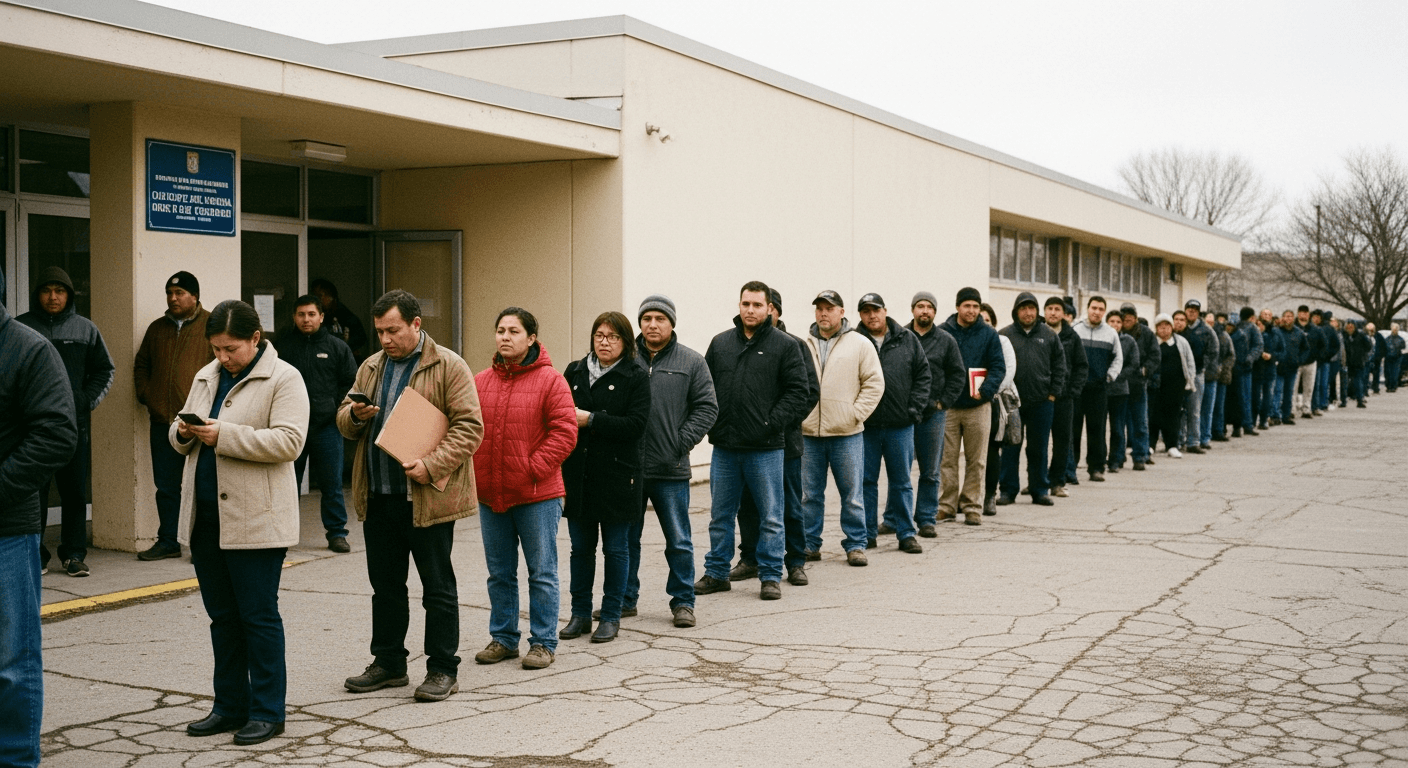
Not in the soft sense, everything digital is metered somewhere, but in the hard sense that paying customers are being told, at peak hours, that the service they bought is not available to them. Developers on Claude Code subscriptions have been reporting truncated sessions and forced downgrades to smaller models during US working hours. People who restructured their workflows around a tool are now discovering the tool is conditional on load.
This is the part of the AI story that the capability discourse keeps skipping. We have spent three years talking about these systems as if they were products, things you buy, own, and use. They are not products. They are utilities delivered at the pleasure of whoever owns the compute, and the terms of delivery can change, silently, between one Tuesday and the next.
Consider who absorbs the cost of Anthropic's growth. Not Anthropic, its revenue tripled. Not the enterprise customers with negotiated capacity guarantees; they sit at the front of the queue by contract. The cost falls on the individual subscribers and small teams who switched to Claude in good faith, often citing ethical preference after the DOD row, and who now find themselves downgraded when the servers are hot. They paid the same monthly fee in March as in April. In April they got less.
There is a pattern here worth naming. In every previous wave of platform consolidation, search, social, cloud, payments, the early years featured generous terms to attract users, followed by a quiet repricing once switching costs had accumulated. Cory Doctorow has a word for the late stage; I won't use it, because we are not there yet and the word does too much work. But the mechanism, attract, lock in, degrade, is recognisable, and it does not require bad intent. It requires only that the infrastructure be scarce, the demand be elastic upward, and the customer have nowhere else to go that isn't doing the same thing.
Nowhere else to go is the operative phrase. OpenAI's memo frames Anthropic's capacity crunch as an opportunity, which tells you that OpenAI expects a chunk of frustrated Claude users to switch back. Fine. But a market in which two firms trade the same users back and forth based on whose servers are least overloaded this quarter is not a competitive market in the sense that matters to a user. It is a duopoly negotiating the terms of a dependency.
The deeper question the $30B number raises isn't whether Anthropic underbought compute. It's whether anyone building serious workflows on top of these systems has any meaningful claim on their continuity. As far as I can tell: no. The terms of service are unilateral. The rate limits are adjustable at will. The model you relied on last month can be deprecated, degraded, or quietly swapped for a cheaper variant, and your recourse is to cancel.
For individual users this is annoying. For the small businesses, freelancers, and public-sector teams now routing real work through Claude, it's something more than annoying. It's a dependency they do not control, on an input they cannot substitute, priced by a vendor whose incentives to honour the original bargain weaken with every quarter of growth.
Thirty billion in ARR is a remarkable number. It is also a number that was produced, in part, by telling paying customers to wait their turn. That's not a strategic misstep. That's the shape of the thing.
Footnotes
Footnotes
-
Fortune, 14 April 2026, reporting Anthropic ARR at approximately $30B, up from $9B at end-2025, with growth attributed to Claude Code adoption and post-DOD-dispute consumer migration. ↩
-
CNBC, reporting on an internal OpenAI memo from the company's revenue chief characterising Anthropic's compute capacity position as a "strategic misstep." Coverage also documented user-facing outages and tightened peak-hour usage limits on Claude subscriptions during the same period. ↩
Discussion
No comments yet, be the first.