Anthropic's $30 billion problem is that it has $30 billion
Anthropic's annualised revenue went from $9bn to $30bn in four months. For context, Salesforce took 23 years to get there. The problem is what that growth implies it cannot do.
Here is a number that should be impossible. Anthropic's annualised revenue has gone from $9 billion at the end of 2025 to $30 billion by mid-April 2026.1 That is a tripling in roughly four months. For context, Salesforce, a company with twenty-six years of compounding, a sales force the size of a small nation, and a product category it essentially invented, reached $30 billion ARR in 2024. Anthropic did it in a quarter.
And yet the interesting thing about the $30 billion number is not the number. It is that Anthropic's users are furious, its systems are buckling under peak load, and OpenAI's revenue chief has circulated an internal memo, promptly leaked to CNBC, describing Anthropic's compute position as a "strategic misstep."2 A company growing at this rate is being told, by its largest competitor and by a meaningful slice of its own customers, that it has got something badly wrong.
And yet the interesting thing about the $30 billion number is not the number.
I think the memo is right about the facts and wrong about the conclusion. And the gap between those two things is the most interesting thing happening in the model layer right now.
What actually happened
The proximate cause of the surge is reasonably well-understood. Claude Code kept eating developer workflows through Q1. The DOD contract dispute in February, where Anthropic walked away from a deployment on stated safety grounds, produced a wave of consumer and prosumer switchers who read the move as a signal about where the company's priorities sit.3 Fortune's reporting suggests the consumer sign-ups alone accounted for a material fraction of the Q1 step-up, though the enterprise Claude Code line is still the larger absolute contributor.
The result is that Anthropic is now rate-limiting paying users during peak London and New York hours, has had two multi-hour outages in the last fortnight, and is visibly triaging capacity between its API customers and its direct consumer product. Reddit and X are doing what Reddit and X do. The phrase "I'm paying for this" appears a lot.
So: is it a strategic misstep?
The OpenAI memo's argument
The leaked memo, as CNBC reports it, makes roughly three claims.2 First, that Anthropic under-provisioned compute relative to its demand curve because it over-indexed on safety-driven deployment caution and under-indexed on commercial readiness. Second, that the resulting user experience is driving a measurable slice of Claude Code users to evaluate Codex and Cursor-with-GPT alternatives. Third, and this is the part that is doing the real work, that Anthropic's willingness to throttle paying customers reveals a company that does not yet think of itself as infrastructure.
The first two claims are defensible and partially true. The third is the one I want to push on, because it is where the memo's logic breaks.
The infrastructure frame is the wrong frame
The implicit model in the memo is that frontier model providers are becoming infrastructure, and infrastructure providers do not throttle paying customers. AWS does not tell you that S3 is full this afternoon, please try again after 8pm. If Anthropic is throttling, it is failing to become what it needs to become.
This is a clean argument and I think it is wrong, for a reason that matters beyond this specific spat.
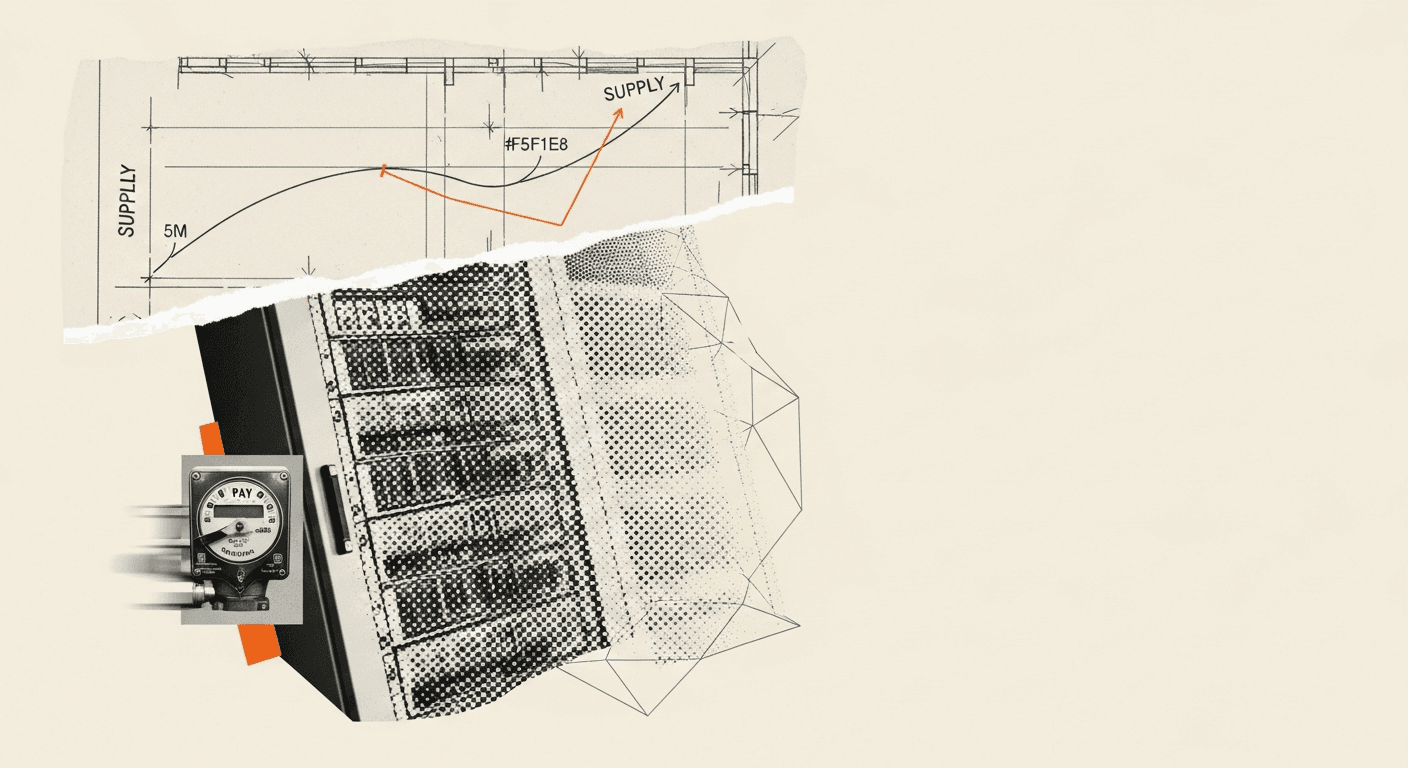
Frontier inference is not infrastructure in the AWS sense. It is a capacity-constrained good where the marginal unit is genuinely expensive, the supply curve is set two years in advance by fab allocations and power contracts, and the quality of the output degrades meaningfully under load in ways S3 throughput does not. When Anthropic throttles, it is not failing to be infrastructure; it is refusing to degrade output quality or burn margin to hide the constraint. Those are different choices with different consequences.
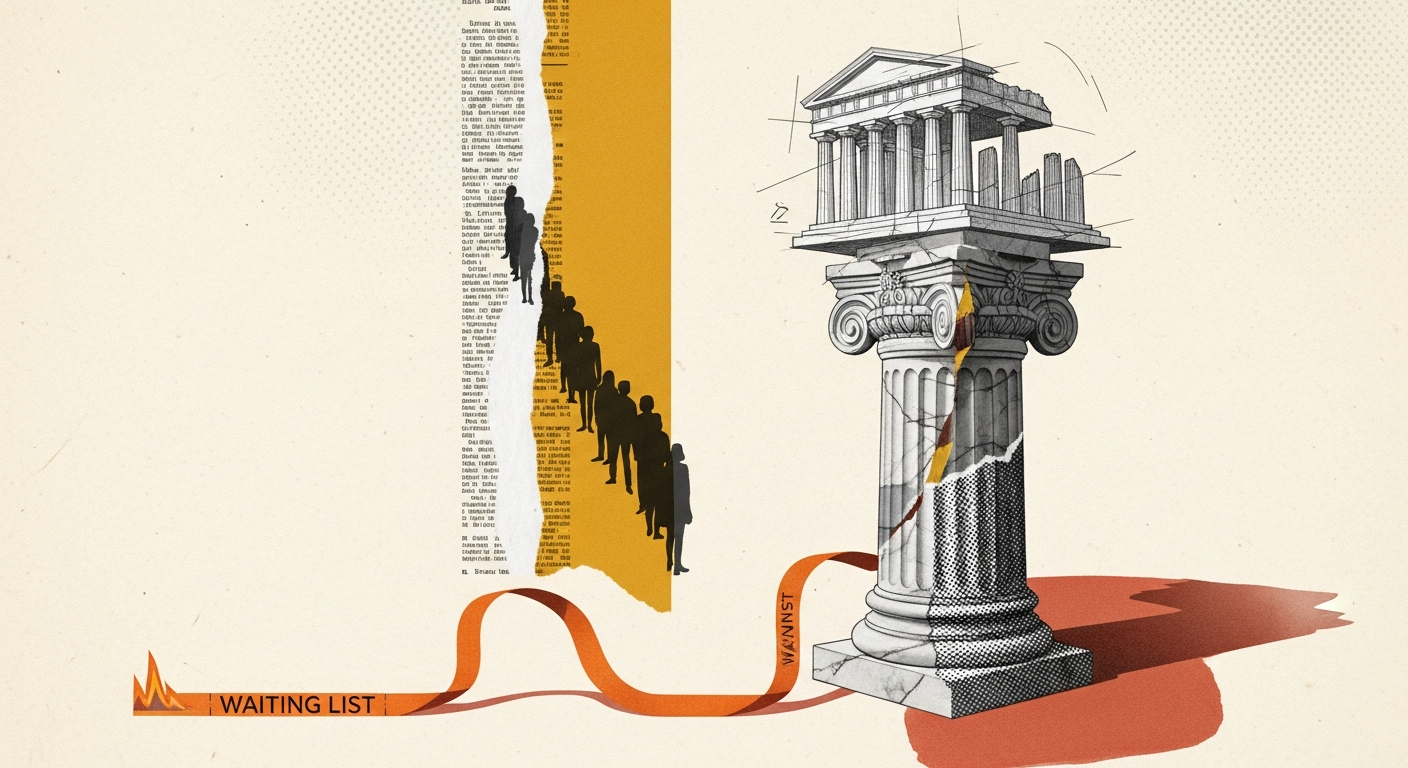
The more honest comparison is not AWS. It is a luxury supply-constrained category, the kind of good where the waiting list is itself part of the signal. I am not saying Claude is a Birkin bag. I am saying the economics of a capability-differentiated, compute-bound, fast-improving model look more like a constrained high-end good than like commodity infrastructure, and the playbook is different.
Which is why OpenAI's own behaviour is instructive. OpenAI has, for the last eighteen months, chosen the opposite strategy: provision aggressively, absorb the margin hit, keep the lights on. The memo frames this as discipline. It is also a bet, that the commodification moment arrives soon enough that the capacity investment pays back before the unit economics catch up with it. That bet may be right. It is not obviously right, and the fact that OpenAI's revenue chief feels the need to write internal memos about a competitor's capacity posture suggests it is not feeling obviously right from inside the building either.
The bit the memo gets right
Where the memo lands is on customer experience, and here I think Anthropic has a genuine problem, just not the one being diagnosed.
Claude Code's value proposition to an enterprise engineering org is reliability inside a workflow. The moment a developer's agent stalls at 3pm because peak limits have kicked in, the workflow dependency breaks, and the IT buyer starts asking whether a second provider needs to sit behind the same abstraction layer. This is how multi-model procurement becomes the default, and once it is the default, the pricing power of any single frontier provider compresses meaningfully.
So the risk to Anthropic is not that it has under-provisioned. It is that its under-provisioning is teaching its largest customers to build abstraction layers that route around it. That is a durable architectural change driven by a transient capacity problem, and it is the thing I would be worrying about if I were running commercial strategy in San Francisco.
What to watch
Two things. First, whether Anthropic's Q2 capacity additions, the company has signalled a material step-up, though without specific figures, arrive fast enough to close the experience gap before the abstraction layers harden. Second, whether Claude Code's enterprise churn numbers in Q2 show the switching behaviour the memo predicts, or whether developer stickiness holds through the throttling.
If I had to bet: the capacity catches up, the abstraction layers don't un-build, and the $30 billion number looks, in retrospect, like the moment Anthropic stopped being a model company and started being something it has not yet figured out how to be.
Footnotes
Footnotes
Discussion
No comments yet, be the first.