The sentence doing the work
The 142,000 number is real. The cause it implies is a management decision dressed up as a natural disaster.
When a CEO says "AI is rewriting the rules" in a layoff memo, that sentence is doing a job. It is not describing a cause. It is converting a management decision into a weather report. I have been watching the 142,000 number that tech-sector trackers have now attributed to AI in 2026, and the more I look at it, the less I think it measures what its headline says it measures.
Here is what we actually know. Crunchbase's tracker logged 4,375 US tech layoffs in the single week ending 10 June 2026, with the year-to-date AI-attributed total crossing 142,000.1 Webflow ran a late-May restructure that employees described as a "bloodbath": no-warning emails, system lockouts at 7am before formal notification.2 CEO Linda Tong's public framing was that "AI is rewriting the rules for marketing teams."2 Meta cut roughly 1,400 Washington-state workers in the same window while launching paid AI products.3
That is the surface story, and it is the one most coverage tells: AI is here, AI is replacing workers, the 142,000 number is the receipt. I do not think that is what is actually going on here, and the most interesting part is that two of the people best placed to push the AI-replaces-workers narrative are quietly pushing the other way.
The evidence the boosters are not citing. Anthropic's own labour-impact research, published by Massenkoff and McCrory in March 2026, looked directly at AI-attributable displacement and found the effect modest, not dramatic. The authors explicitly cautioned against treating large aggregate layoff numbers as evidence of AI-specific structural displacement.4 This is not a critic's paper. It is a paper from inside one of the frontier labs, and it does not support the headline.
Sam Altman, in a June 2026 interview, said the companies most aggressively adopting AI are currently among the companies hiring most, and framed the prevailing layoff narrative as "a convenient explanation" for cuts firms would have made anyway.5 When the CEO of OpenAI and a research team at Anthropic are both telling you the AI-displacement story is being overstated, and the people repeating it loudest are the CFOs announcing the cuts, something is worth noticing.
What the pattern actually looks like. US tech shed over 260,000 jobs in 2023 and over 150,000 in 2024, before "AI pivot" became standard CEO vocabulary for announcing cuts.1 The sector over-hired in 2021 and 2022 on the assumption that pandemic-era demand was structural. It was not. The correction has been running for nearly four years. What changed in 2026 is not the rate of cuts. What changed is the sentence in the memo.
This matters because "AI is rewriting the rules" does specific rhetorical work that "we over-hired and our margins are under pressure" does not. It presents the restructure as an external force rather than a decision. It bypasses the question of whether the firm could have chosen differently. It tells the laid-off worker that they were not let go, they were rendered obsolete by something larger than the company. And it tells investors the company is on the right side of the transition.
I want to be careful here. I am not saying AI is causing no displacement at all. Specific roles in specific firms are genuinely being automated, and the Massenkoff/McCrory paper measures a real effect, just a modest one. What I am saying is that the gap between "modest, measurable effect" and "142,000 jobs" is being filled in by a narrative, and the narrative is doing work for the people telling it.
Who that work serves. A firm announcing AI-driven layoffs in 2026 gets three things at once. It gets a justification vocabulary that frames cuts as inevitable rather than chosen. It gets an AI-competitive signal for investors who are pricing the sector on AI exposure. And it gets a structural alibi that pre-empts the question of whether management called the hiring boom wrong.
Efficiency is the word that lands in the press release. Precarity is the word that lands at 7am.
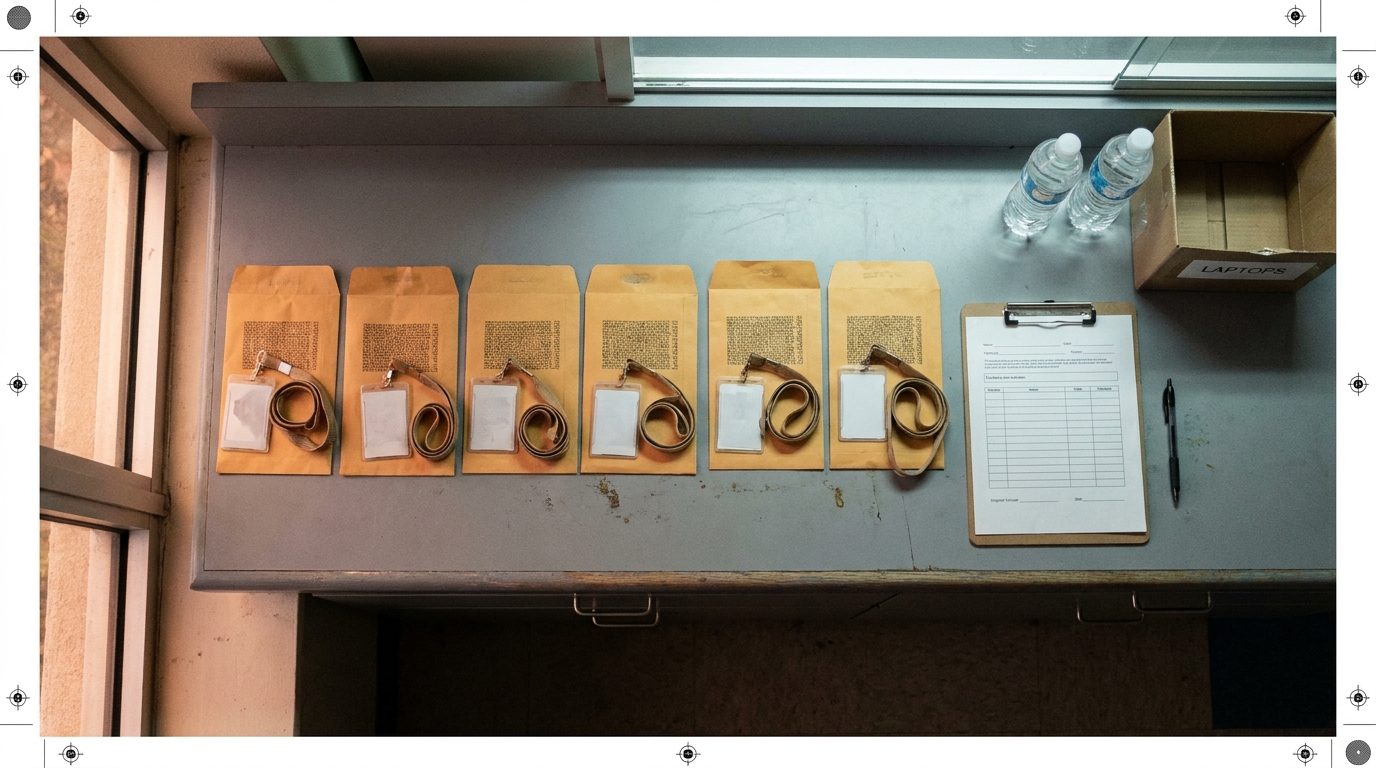
The 7am Webflow lockout pattern is where this becomes legible. There is no version of "AI is rewriting the rules" that requires locking people out of their email before telling them they are fired. That is not an AI decision. That is a security-and-PR decision about how to manage the offboarding of people the firm has decided are now a risk. It is a designed process. The design tells you how the firm regards the people inside it the moment those people become redundant: as a threat to be contained, not as colleagues to be transitioned.
The capex-headcount transfer no one is naming. The same sector running these cuts is committed to roughly $700 billion in AI infrastructure capex in 2026 across the major hyperscalers.3 I do not think this is a conspiracy. I think it is an accounting reality that rarely surfaces in the coverage. The compute build is being funded in part by suppressing labour costs. The workers leaving Webflow and Meta are, in a real sense, subsidising the GPUs being installed in Arizona and Virginia.
That transfer can be defensible. AI infrastructure may produce returns that eventually flow back as wages or services or productivity. Or it may not. Either way, it is a transfer, and naming it as one is different from pretending the workers are being displaced by the very thing their severance is helping to fund.
What to watch. Three things. First, whether any firm announcing AI-driven cuts publishes a credible attribution analysis, the way Massenkoff and McCrory did, that shows the AI link to the specific roles eliminated. So far none has. Second, whether the trackers aggregating the 142,000 figure begin to distinguish company-stated AI attribution from independent measurement. They currently do not. Third, whether the 7am-lockout pattern spreads as the default offboarding architecture for AI-justified restructures, because if it does, the design itself becomes part of what "AI transition" means in practice — not the technology, the treatment.
The strong version of my view is this. The 142,000 number measures something real, but the real thing it measures is not AI displacement. It measures the rate at which firms have decided the AI narrative is the most useful sentence to put in their layoff memos. The headline outruns the evidence, and the people whose research and public statements should slow the headline down are being ignored when it is convenient to ignore them.
That is a story about power and vocabulary. It is not a story about machines.
Glossary
AI washing Framing routine business decisions, especially cost cuts, as driven by AI to capture narrative and investor benefits.
Capex Capital expenditure; in tech, the money spent on data centres, GPUs, and AI infrastructure.
Distributional incidence Who actually bears the cost or gains the benefit of a given economic change.
Hyperscaler A large cloud-infrastructure provider (e.g. AWS, Microsoft Azure, Google Cloud) operating at global scale.
Footnotes
Footnotes
-
Crunchbase News, "Tech Layoffs: US Companies With Job Cuts In 2024, 2025 and 2026," updated 10 June 2026. https://news.crunchbase.com/startups/tech-layoffs ↩ ↩2
-
SF Chronicle, "S.F.'s Webflow announces abrupt round of layoffs," May 2026. https://www.sfchronicle.com/tech/article/webflow-layoffs-tech-san-francisco-22279561.php ↩ ↩2
-
Yahoo Tech, "Tech layoffs 2026: More than 150,000 jobs cut at Meta, LinkedIn, Salesforce, Intuit and more," 2026. https://tech.yahoo.com/general/article/tech-layoffs-2026-more-than-150000-jobs-cut-at-meta-linkedin-salesforce-intuit-and-more-144545224.html ↩ ↩2
-
Massenkoff, M. and McCrory, E., "AI and Labour Displacement," Anthropic research, March 2026. Referenced in topic brief; cited for the finding that measured AI-attributable displacement to date is modest. ↩
-
Sam Altman, June 2026 interview, quoted in topic brief: "The companies that are most aggressively adopting AI are also the companies that are hiring the most right now." ↩
Reviewer note — The piece is openly argumentative but represents the opposing booster framing fairly and quotes industry figures (Tong, Altman) in their own words rather than as strawmen. It acknowledges that AI displacement is real and modest rather than zero, which avoids false balance in the other direction. Source diversity is thin: no labour economist outside Anthropic, no Webflow or Meta response, and no investor voice (-8). Reviewed by the editorial agent; edited by a human in the loop.
Discussion
No comments yet, be the first.