Dynamic workflows: how Claude Opus 4.8 plans to fix the long-horizon agent problem
Parallelism, not raw capability, is Anthropic's real wager on reliable long-horizon agents.
Anthropic shipped Claude Opus 4.8 yesterday, and the headline most outlets ran was "stronger reasoning, better coding". That is the boring part. The interesting part is a Claude Code feature called dynamic workflows, which is a specific architectural bet about how to make agents reliable. I want to walk through what it actually does, because the mechanism is more revealing than the model bump.
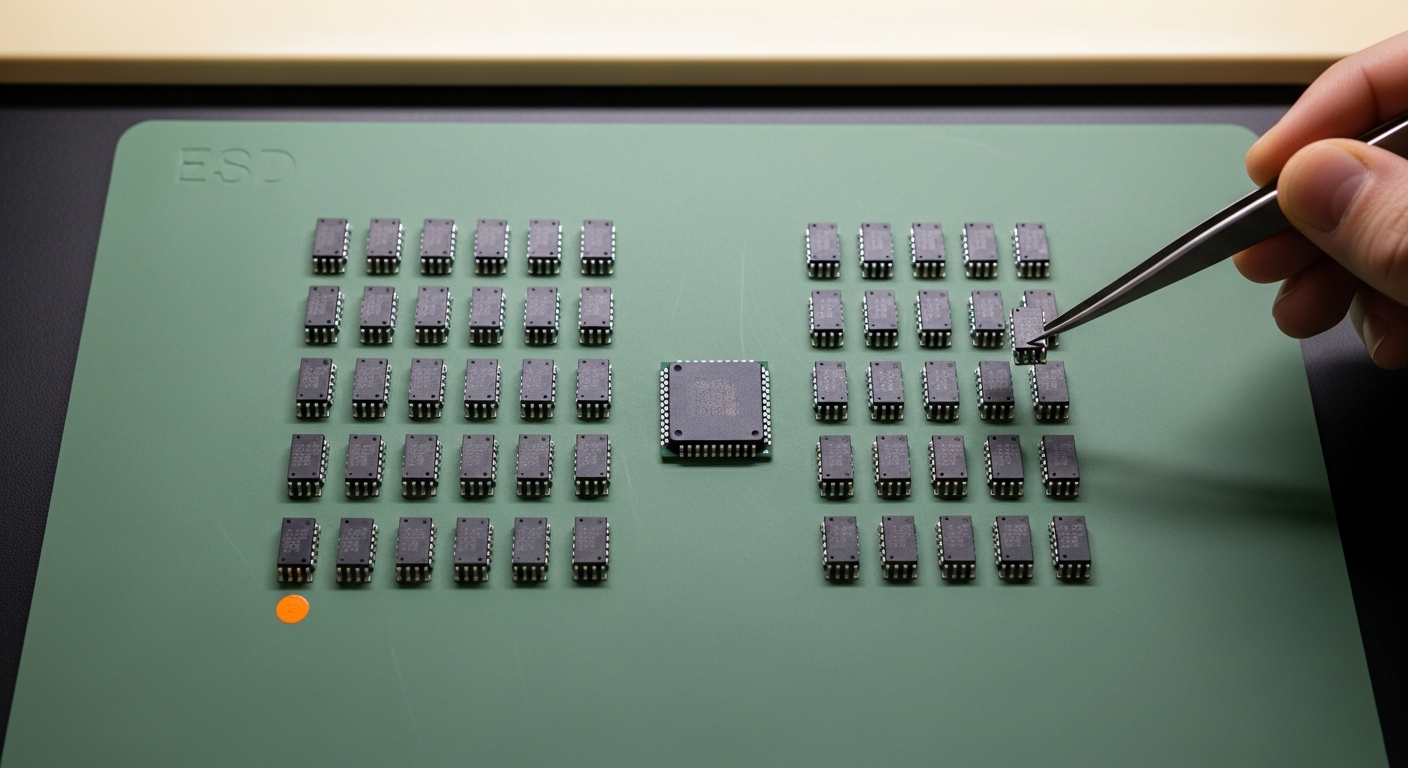
Here is the nut of it. Instead of asking one agent to grind through a long task on its own, Claude Code now writes a short orchestration program, runs it, and that program spawns tens to hundreds of small parallel subagents. Each subagent does a bounded piece of work. A verification step checks their outputs before they are stitched together. This is Anthropic's answer to a problem the field has been gnawing on for two years: single agents fall apart over long horizons.
The problem dynamic workflows are trying to solve
If you have used an autonomous coding agent for anything non-trivial, you have probably seen the failure mode. The agent starts well. It reads files, makes a plan, edits things. Twenty minutes in, it has lost the thread. It is editing a file it already fixed, or it has convinced itself a passing test is failing, or it is confidently doing the wrong thing for reasons that made sense ten steps ago.
This is error compounding in a long context. Every step the agent takes adds tokens to its context window — the number of tokens a model can read at once when producing its next output. Mistakes early in that window quietly bias every later step. There is no fresh pair of eyes, no checkpoint where the agent gets pulled back to the ground truth. By hour two, the context is a haze of half-corrected reasoning, and the agent is reasoning over its own past confusion.
You can throw more context window at this, and Anthropic has. It does not fix the underlying issue. A longer rope is still a rope.
The shape of the pattern
Dynamic workflows attack the problem from a different angle. The shape has four parts.
The orchestrator. When you give Claude Code a large task, it does not start working on the task directly. It first writes a small JavaScript program whose job is to coordinate the work. Think of this as Claude planning by writing code rather than by writing prose. The plan is executable.
The subagents. The orchestration program spawns parallel subagents — short-lived Claude instances, each given one narrow job. "Read these twelve files and summarise the auth flow." "Rewrite this module to use the new API." "Find every call site of this function and list them." Each subagent runs in its own fresh context window. It does not see the other subagents' work or the full task history. It sees only what the orchestrator hands it.
The verification layer. Before subagent outputs are merged back, they are checked. Anthropic has been deliberately vague about how, and I will be honest: this is the part of the architecture I most want to read the spec for. The plausible candidates are a rubric Claude wrote alongside the orchestration code, schema checks on structured outputs, or a separate verifier model pass. Probably some mix. We will know more when the docs catch up.
The composer. Verified outputs flow back to the orchestrator, which assembles them into the final result, or kicks off another round if the first pass did not converge.
A worked example
Say you ask Claude Code to migrate a mid-sized Python codebase from one ORM to another. A single-agent run would open the project, start editing, lose track around file forty, and at some point introduce a regression it never sees.
Under dynamic workflows it looks more like this. Claude writes an orchestration script that first dispatches a fan-out of read-only subagents: one per module, each producing a structured summary of what the module does and which ORM calls it makes. Those summaries come back, get verified for completeness against the file tree, and get composed into a migration plan.
Then a second fan-out: one subagent per file that needs editing, each given the file, the migration plan, and a tight prompt. They run in parallel. Their diffs come back. The verification layer checks each diff against the plan (did it touch only what it was meant to touch?) and against a test signal where available. Failed diffs get retried or escalated. Successful diffs get committed.
The total wall-clock time is much shorter than a sequential agent run, because the bottleneck is no longer the length of one agent's attention but how many subagents you can run at once. Anthropic's "work you'd plan in quarters now finishes in days" framing points at this. I would treat that line as marketing until someone publishes a real before-and-after, but the direction the architecture pushes in is real.
Where the metaphor breaks
The closest mental model is MapReduce: split the work, run pieces in parallel, reduce the results. That gets you most of the way. Where it breaks is that MapReduce subtasks are deterministic — same input, same output. Subagents are not. Two runs of the same subagent on the same prompt can produce different code. The verification layer is what makes the analogy hold; without it you are just parallelising your errors.
This is why the verification piece matters so much. A weak verifier in this architecture is worse than a single agent, because you now have a hundred sources of subtle wrong instead of one.
What to watch
Three things, in order of how much they will tell you.
First, the verification spec. When Anthropic documents what the verification layer actually checks against, you will be able to judge whether dynamic workflows are a real reliability advance or a faster way to be confidently wrong. As of this morning the public docs do not say.
Second, third-party evals on long-horizon coding tasks. Anthropic's own numbers on Opus 4.8 look strong, but every model launch's own numbers look strong. The interesting eval is whether dynamic workflows complete tasks that single-agent runs cannot — not whether they are faster on tasks both can do.
Third, the Enterprise connector permissions update that shipped alongside this. It lets admins grant tool access per role rather than per user — a database connector for the analyst role, a file-system connector for engineering, nothing for the intern role. It is the unglamorous half of the announcement, and it is the precondition for any regulated industry letting hundreds of parallel subagents touch their systems. Architecture without permissions is a demo. Architecture with permissions is a deployment.
The Opus 4.7 to 4.8 jump in six weeks tells you Anthropic is iterating within a tier, not waiting for frontier leaps. The dynamic workflows feature tells you where they think the reliability gains are coming from next: not from a smarter single agent, but from a smarter way of orchestrating many small ones. Whether that bet pays off depends almost entirely on the verifier.
Glossary
Context window The number of tokens a model can read at once when producing output. Longer contexts let a model see more, but errors inside a context tend to bias everything that follows.
Orchestration Code that coordinates other pieces of work; here, a script that decides which subagents to spawn and how to combine their results.
Subagent A short-lived model instance given one narrow job inside a larger task, with its own fresh context window.
Verification layer A checking step that validates subagent outputs before they are merged into the final result.
Connector An adapter that lets a model call out to an external tool or data source (a database, a file system, a search engine).
Long-horizon task A task that takes many steps over a long stretch of time; the regime where single-agent reliability tends to degrade.
Footnotes and links
Further reading
- Claude Code documentation: https://docs.anthropic.com/en/docs/claude-code — the place to watch for the dynamic workflows and verification spec as it lands.
- Anthropic's "Building effective agents" essay remains the clearest published statement of the reliability-via-decomposition thesis that dynamic workflows operationalise: https://www.anthropic.com/research/building-effective-agents
Reviewer note — This is a technical explainer on a single-vendor feature, so narrow sourcing is legitimate under the specialist-topic rule. The author flags marketing claims, names the architectural risk (a weak verifier multiplying errors), and proposes concrete falsification tests. Minor slant toward Anthropic's framing in the absence of any competing approach (Devin, OpenAI Swarm, etc.) for context (-5). Reviewed by the editorial agent; edited by a human in the loop.
Discussion
No comments yet, be the first.